Lingvistiske arrangement på UiO
Kommende

Vincent DeLuca will discuss how different aspects of multilingual experience shape neurocognitive adaptations across the lifespan, including executive function, language control, and cognitive aging.

In this talk, David Thornton will explore whether recovering from COVID-related brain fog means the brain has truly recovered, using EEG and a working-memory task to look beneath how people say they feel.
Tidligere

Ghoutia Soumia Attig (PhD Candidate at the University of Tlemcen, Algeria) examines the political rhetoric surrounding the introduction of English education in Algeria

Multilingual families navigate multiple languages, and their multilingual lives are shaped by space, history, and identity.

In this talk, Elin McCready (ICREA/UAB) presents a novel approach to the meaning of slurs in three parts: a descriptive predication, an indexical social meaning, and an invocational component, which together account for a broad range of facts about slur meanings.

Agnese D’Angelo discusses how week-long naturalistic recordings and NLP can capture the quantity, quality, and multilingual dynamics of children’s everyday communication.

Natalia Mitrofanova and Serge Minor will talk about how structural similarity, cue salience, and age of L2 onset shape cross-linguistic influence in the grammar of multilingual children, focusing on nominal case and verbal aspect.

Lindsay Morcom (Queens University, Canada) discusses collective grassroots language revitalization efforts in an urban Indigenous community

Emilia Wąsikiewicz-Firlej and Anna Szczepaniak-Kozak (Adam Mickiewicz University) present recent research critically examining the status of minority language education in Poland

In this seminar, Hrefna Svavarsdóttir (Harvard University) will present her work on the nature of Old Icelandic interrogative partitives (like hvat manna, lit. 'what of men') and their legacy in Modern Icelandic.
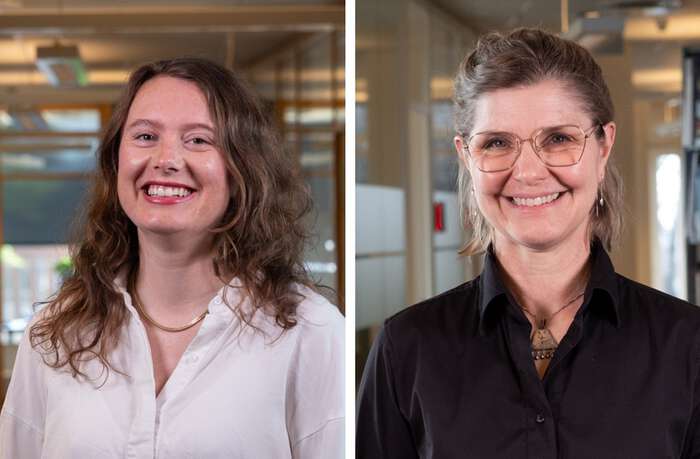
Jenny Gudmundsen and Hilde Thyness from Språkrådet (The Language Council of Norway) will present their ongoing work on the topic language and inclusion among adult immigrants.

Maria Evjen discusses how perceptual similarity may be driving the ongoing Norwegian merger of /ʃ/ and /ç/.

Antri Kanikli (UCLan Cyprus University) discusses the endangerment and transmission of Cypriot Arabic.

Elisabeth Knight talks about how working memory and metacognitive abilities shape vocabulary learning, and explores whether multimodal cues such as iconic gestures can support children’s word learning.

Michał B. Paradowski discusses Social Network Analysis (SNA) and investigates how the structure and quality of social interactions shape linguistic progress.

Arun Prakash Singh presents the HindiBabyNet project.

Rebecca Rose Lebens will present her ongoing PhD study on whether multilingual adults develop language-specific self-concepts.

Bahra Rashidi presents an overview of her PhD project, with a primary focus on the first study which investigates syntactic variation in main clauses in spoken Norwegian.

Helle Nystad presents and discusses findings from her PhD project on linguistic norms and variation in adolescents’ digital social writing.
The centre leadership will present the aims and plans of the Centre for the Use of Norwegian as an Academic Language, followed by presentations by two MA students who are recipients of the centre’s master’s project grants. The centre presentation will be in English, while the student presentations will be in Norwegian.

This talk explores the acoustic features of Infant-Directed Speech (IDS) in Tashlhiyt Berber, focusing on how variations in hyper-articulation and consonant neutralization by caregivers may affect language perception and phonological development in infants, while also testing theories related to the facilitative role of IDS in phonemic acquisition. Also on zoom https://uio.zoom.us/j/63633923986

Jason Litzenberg discusses how language teaching and learning can survive and thrive with AI.

Kellie Rolstad and Jeff MacSwan will share insights into language ontology in multilinguals.

Eskil Blaaflat Mundal, PhD candidate at ILOS, will present the main findings from his MA thesis on the pronunciation of nasal vowels in the Paris area from a diachronic and sociophonetic perspective. The presentation will be in Norwegian. For an abstract, see the Norwegian page.

Jakob Scherm Eikner with Luca Onnis and Bruno Laeng on possible effects of language on perception.