Self-archiving: how to submit your article
- Keep an accepted version of your article. Contact the corresponding author if you do not have it yourself. See examples of accepted versions of articles.
- After you have published your article, upload the accepted version (AAM) in NVA as an open file (not internal). You must then select "accepted version" and the desired license. You must be logged in to NVA to upload files. See Sikt’s guide for uploading.
- NB! Articles that are published open access must also be self-archived.
- Library staff (UB) double-check all uploads before they are made publicly available. No files by UiO-uploaders are made available without first being checked by UB.
- If an embargo applies, the University Library will register this. If your article is covered by the rights retention policy, it can be made available immediately. Information about the rights retention policy applicable to UiO authors.
- If the published version of the article can be made available on the same terms as the AAM, The University Library will ensure that the published version is made available in NVA.
Remember: Does your article have a CC license? Then you can upload the final published version in NVA. If not, upload the accepted version (AAM/postprint).

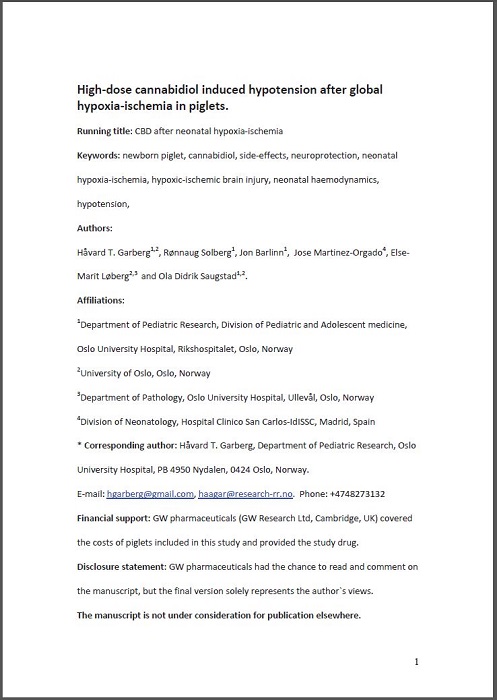
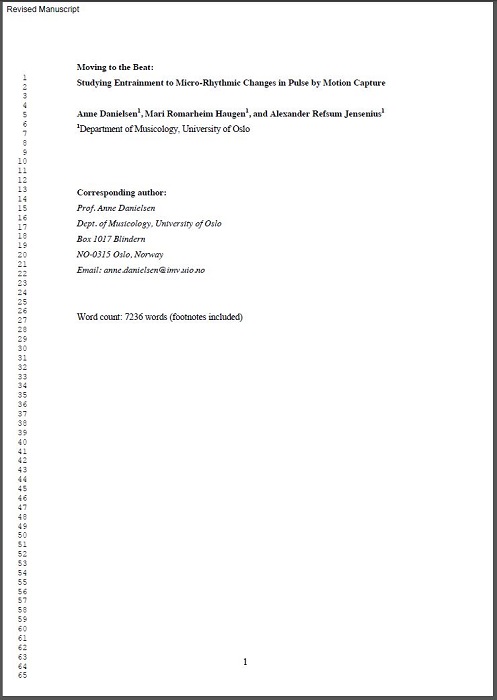
Examples of accepted versions / author versions of articles
The author version is the final draft of the manuscript, including changes made after comments from peer reviewers, without the publisher's final layout.
Common terms
- Post-print, AAM (author's accepted manuscript), accepted version, peer-reviewed version: the final draft of the manuscript, including changes made after comments from peer reviewers, without the publisher's final layout.
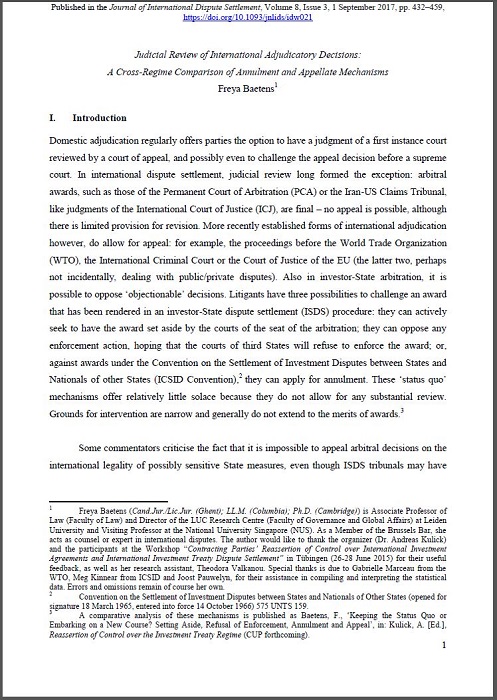
- Published version, Version of record (VoR): the final published version with the publishers layout.
- Pre-print, original manuscript, submitted paper: manuscript before it has been peer reviewed. This version can be ammended after the peer review process.
- Embargo: a period of time defined by the publisher which defines when the author can make the article available in an open archive. The embargo can apply for anything from 6 to 36 months, after that the article can be made available in NVA.
- Institutional archive / repository: An open electronic archive for collecting, preserving, and distributing copies of the academic production in an institution.
Jisc open policy finder (previous Sherpa/Romeo): is a database of publishers' guidelines for self-archiving. The database does not include all Norwegian journals and publishers. For information on book chapters, go to the publisher's website.
- CC-license: open licenses describing an agreement between the author (the copyright holder) and the reader (the user). An article with a "CC BY Attribution"-license grants the reader several ways to use the work, while the author retains the right to be named as the work's author (copyright holder). There are several CC-licenses (CC BY, CC BY-NC, CC BY-NC-ND etc.). You can find more information at our webpage about CC-licenses.
More information about self-archiving
Self-archiving and sharing accepted version (AAM/post-print):
When the article has been accepted, you must save a post-print version of the article based on peer reviews.
According to the requirements from UiO and the Research Council of Norway, this version must be uploaded NVA. You can wait with uploading your article until after it has been published. Often the article will already be registered in NVA, and you will not have to register information manually. After this, uploading the file can then be done quickly. The University Library will check all uploads to NVA to make sure that only allowed versions are available.
Can published version be shared and self-archived?
When the article has been published, you will normally receive a file containing the journal’s final, formatted version. You are not always allowed to self-archive this version in NVA, in subject archives, or to share it on other websites. Check the journal’s website, your publishing contract, or in the database Jisc open policy finder.
Why you can't archive published version
According to the Copyright Act, you as a writer have the rights to distribute and use texts and other material you have produced. However, when you publish scientific texts in books or journals published by commercial publishers, many publishers require you to sign an agreement that entails transferring the right of exclusive publishing to the publisher.
Rights that are often signed to the publisher include, for example, the right to reproduce, distribute, and publicly display the article in any medium, and the right to authorize others to use your publication.
Other archives
In some subjects it is common to share the pre-print version in a subject archive such as arxiv or RePEc. Some publishers allow this, while others do not. You can find out whether the journal does or does not via the journal’s website. It might also be registered in the database Jisc open policy finder.
A lot of people also choose to share their research on social platforms such as ResearchGate or Academia.edu. You should also check the journal’s website to determine whether this is allowed or not.